What Countertop Water Purifiers Remove from Your Tap Water?

Real Stories Behind the Water We Drink


In Flint, Michigan, a seemingly small decision in 2014—to switch its water supply to the Flint River—led to a devastating health crisis. Without proper corrosion control, the aging pipes leached lead into the drinking water, exposing over 99,000 residents to toxic contamination. That number was so large that the CDC eventually declared a state of emergency. The fallout was profound—children suffered developmental damage, and the crisis became a nationwide wake-up call [1].


Meanwhile, in Europe, hard water is a more common complaint. In Italy and Germany, mineral-rich water causes scale build-up in kettles and coffee machines, frustrating households and damaging appliances. 


These everyday inconveniences highlight a key truth: Tap water quality varies widely, and “safe” doesn’t always mean “ideal.” Different regions face various local water usage issues, but they all make people gradually realize that household drinking water may require an additional layer of protection.


That is why in recent years, countertop water purifiers have gained increasing attention in the global market. They are not merely tools for removing impurities from water but also represent a choice people make for their health and quality of life.


Global Water Concerns That Shape Behavior


USA: In some older urban areas, lead pipes are still in use today. According to data from the U.S. Environmental Protection Agency (EPA), long-term consumption of water with excessive lead levels can affect children's neurological development [2].

Europe: The issue of hard water is widespread. Households in countries such as Germany and Italy often need to remove limescale; otherwise, the lifespan of appliances like kettles and dishwashers can be affected.

Southeast Asia: After heavy rains, areas in Southeast Asia often face spikes in bacterial levels due to runoff breaching municipal systems. Such threats may not make headlines globally, but drive local awareness dramatically.

Japan & Korea: Although tap water meets high safety standards, many people are dissatisfied with its taste—especially when brewing tea or cooking rice, where a "softer" water quality is often preferred.


It is evident that water-related challenges are not exclusive to developing countries but represent a global issue.


What Countertop Purifiers Can Do?


• Remove Unwanted Elements—Subtly and Effectively


1. Remove Residual Chlorine & Odors


Chlorination is one of the most common methods of tap water disinfection worldwide, but it often leaves behind a sharp, unpleasant smell. The activated carbon filter inside a countertop water purifier can absorb most residual chlorine, improving the overall taste. Many coffee lovers find that brewing with filtered water brings out the distinct flavors of different coffee beans more effectively.


2. Heavy Metals

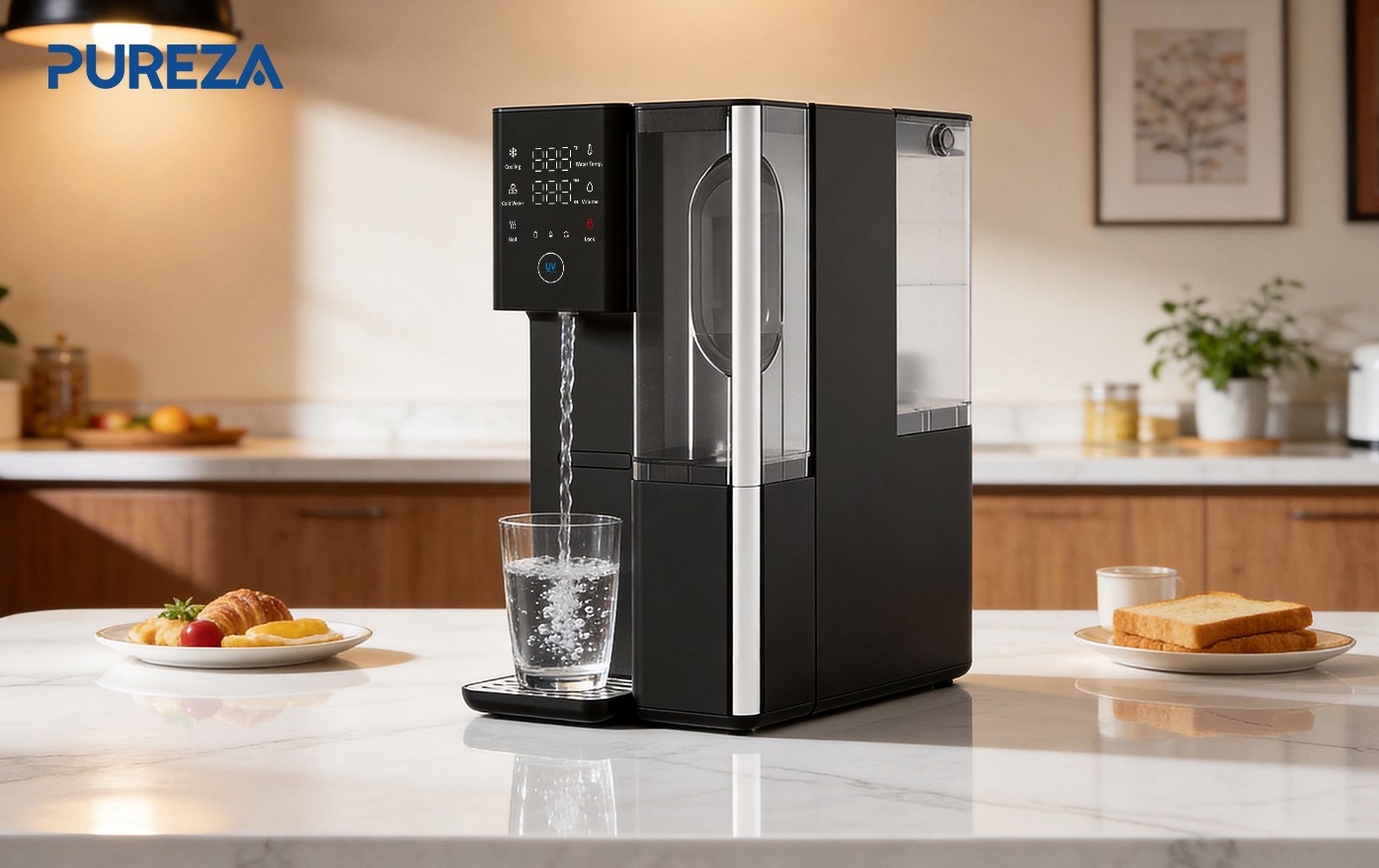
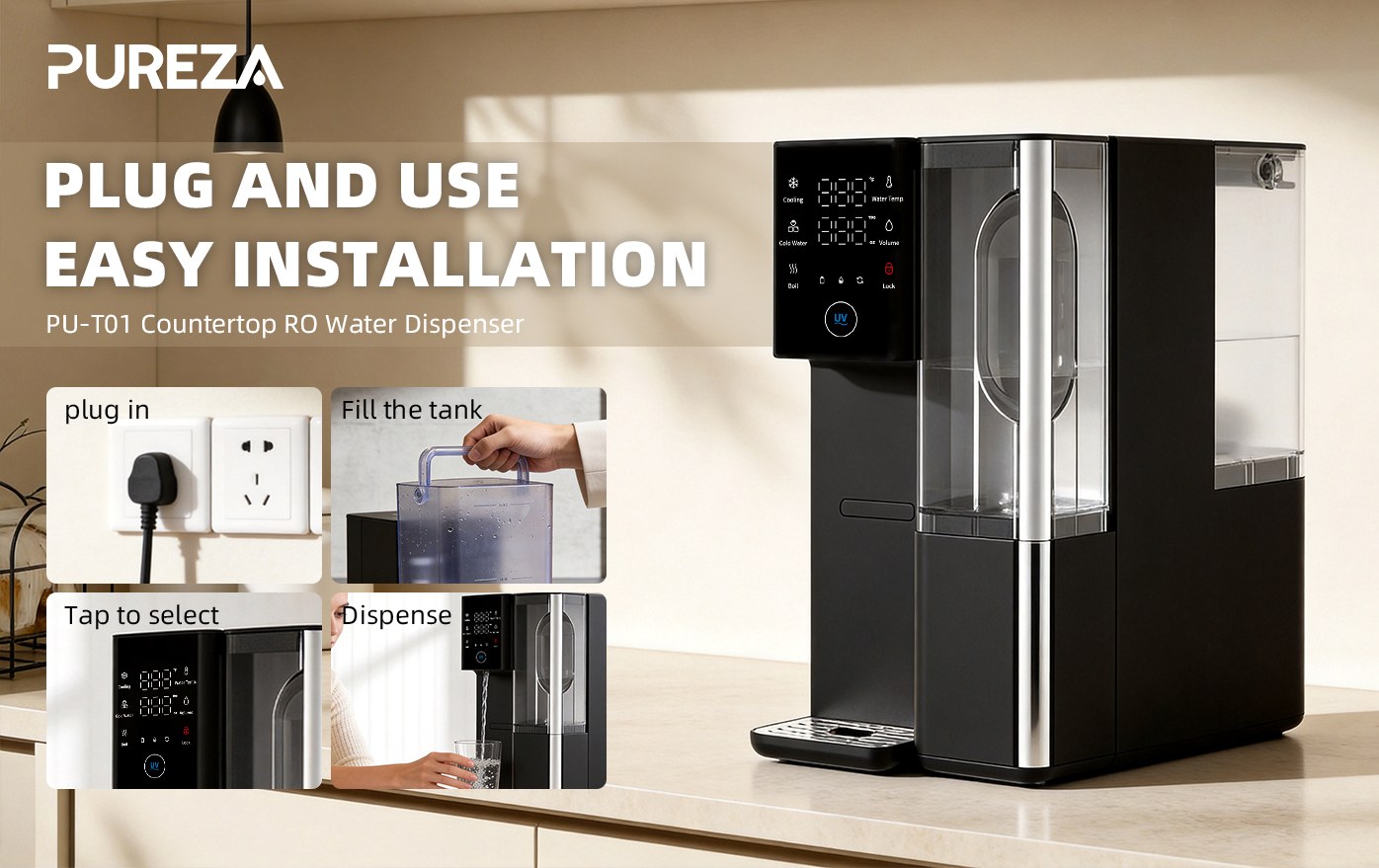
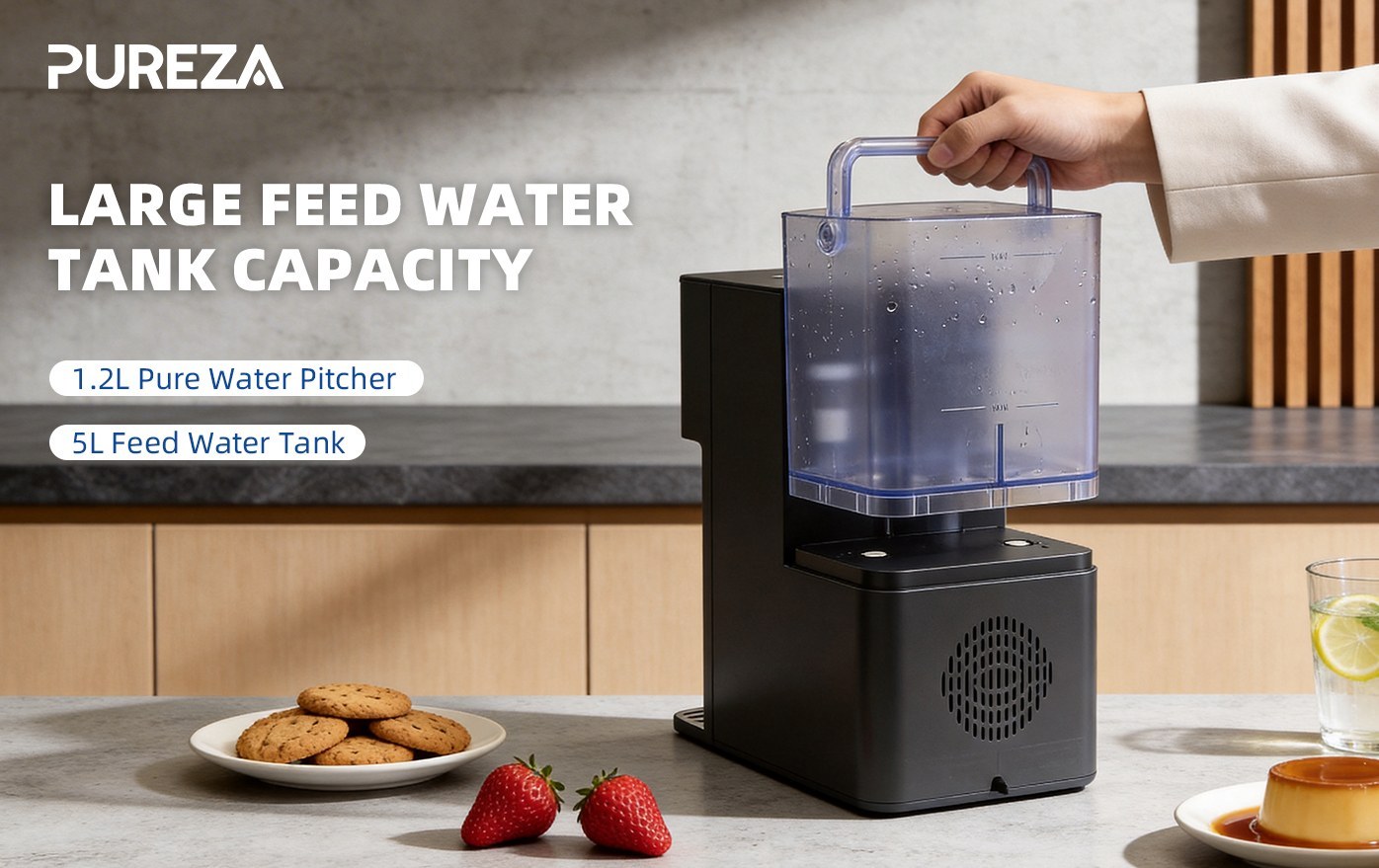
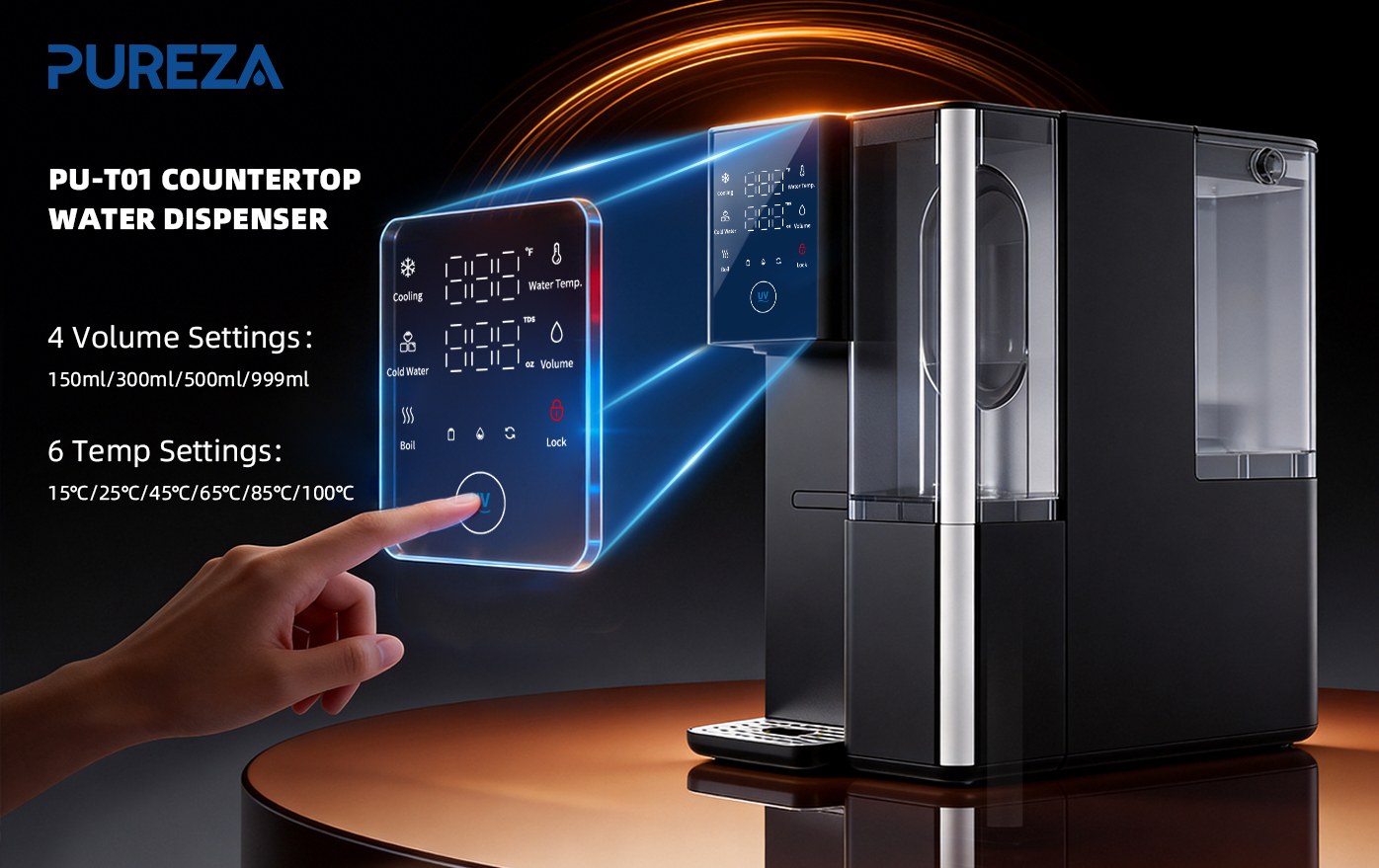
The story of Flint shows us how close heavy metal contamination can be—it may be hiding in the pipelines we cannot see. The RO (reverse osmosis) membrane inside the PU-T01 countertop water purifier removes most harmful substances such as lead, mercury, and arsenic. This is especially important for households with infants and young children, as their tolerance to heavy metals is far lower than that of adults. Using a countertop purifier helps protect children from the risks of heavy metal contamination, safeguarding the entire family’s drinking water safety.


3. Reduce Microbial Risks


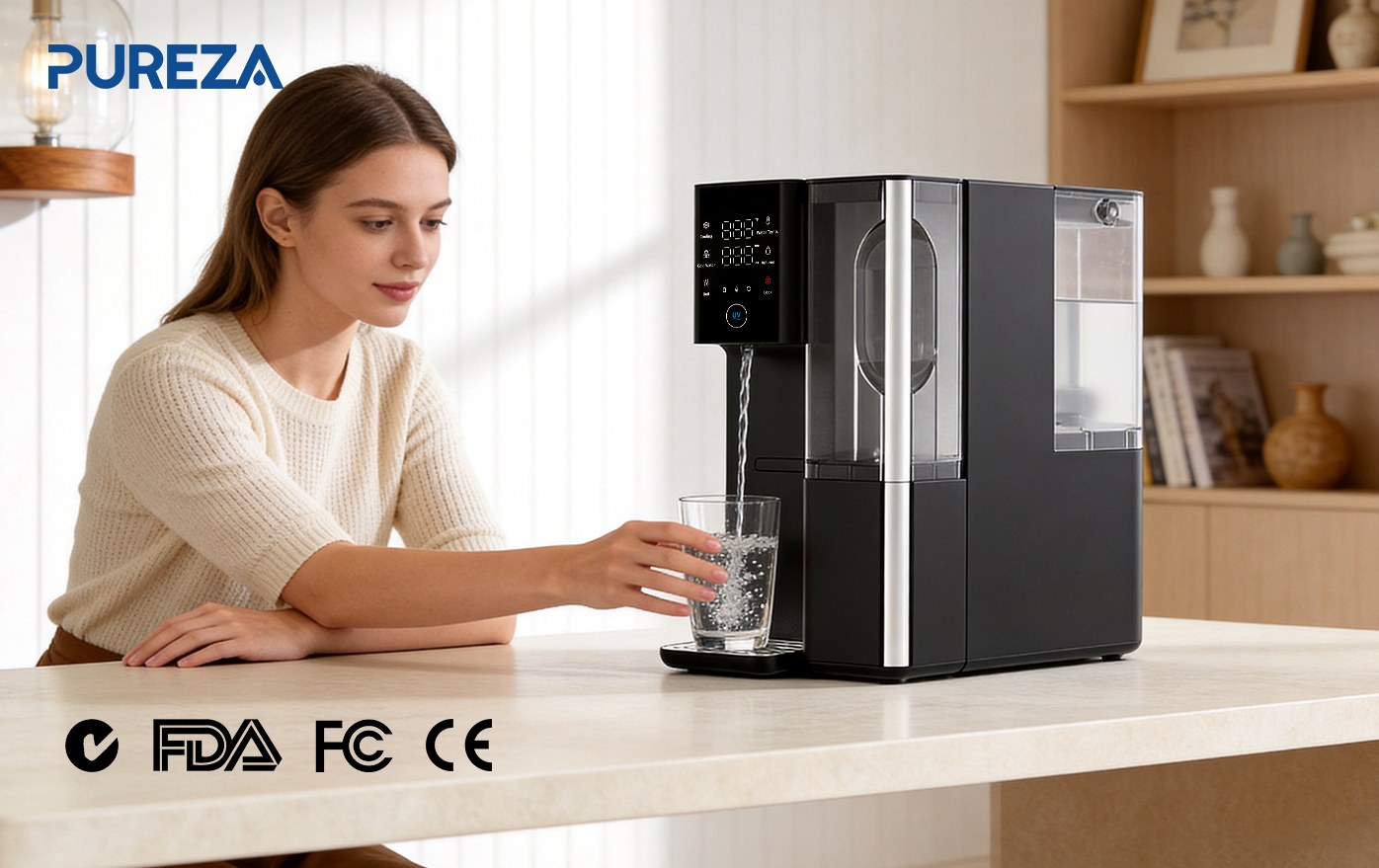
According to the World Health Organization (WHO), millions of people worldwide still contract diarrheal diseases each year due to contaminated water. While municipal water systems are generally disinfected, contamination can still occur during transmission. A countertop water purifier equipped with a UV sterilization module provides an additional barrier, eliminating 99.9% of bacteria and ensuring safer drinking water at home [3].


4. Filter Microplastics


A study analyzing 1,148 tap water samples across 34 countries found that 87% of the samples contained microplastics, indicating widespread contamination of urban tap water systems globally. These tiny particles come from fabric fibers, plastic packaging, and even airborne dust. The precision of a reverse osmosis membrane is high enough to intercept most microplastics, reducing their entry into the human body [4].


Lifestyle Upgrades, Not Just Water Cleaning


When people think of water purifiers, they often focus only on what they “filter out.” In reality, the benefits go far beyond that.

Better taste in beverages: In Italy, many coffee shops install water purifiers to ensure hard water doesn’t spoil the flavor of coffee.

Cooking quality: In Japan, families often use soft water for cooking rice, as it makes the grains fluffier and tastier.

Long-term health: Parents today prefer preparing baby formula with purified water to ensure infant health, while seniors are more concerned about heavy metal and mineral excess in tap water.

Environmental responsibility: Compared with bottled water, using a countertop purifier significantly reduces plastic waste and supports a sustainable lifestyle.

In short, a countertop purifier is not just protection against “pollution”—it’s a proactive choice to enhance quality of life.


Countertop Water Purifiers—The Future of Household Consumption

With global awareness of health and sustainability rising, countertop water purifiers are becoming a household essential.


Three key drivers are behind this growth:

Health consciousness: More consumers are prioritizing safe drinking water, viewing a countertop purifier as a long-term investment in well-being.

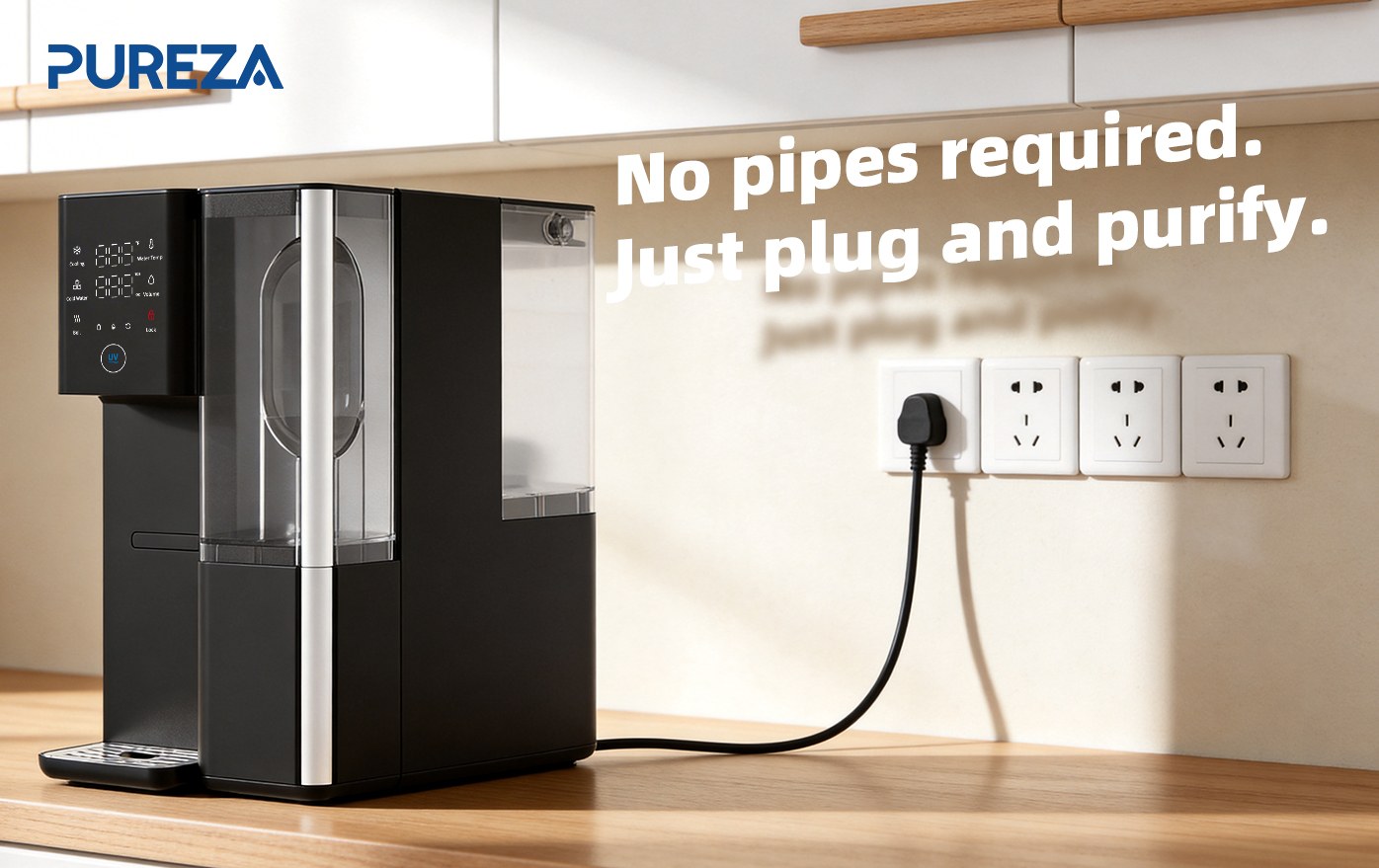
Convenience: This PU-T01 countertop RO water purifier is easy to install, stylish in design, and kitchen-friendly, they meet the needs of anyone seeking filtered water.

Eco-friendliness: By replacing bottled water, they actively reduce plastic pollution.

It is foreseeable that more households will treat countertop water purifiers as a standard kitchen appliance—just as natural as having a dishwasher or oven.


Behind Every Glass of Water—Trust and Quality

Water is something we rely on every single day, yet the hidden risks in tap water are often overlooked. Whether it’s families in the U.S. worried about lead, or European residents troubled by hard water, the ultimate goal is the same: to enjoy safer, purer water, more conveniently.

That’s exactly why we create countertop water purifiers. The next time you turn on the tap, consider this: how long did it take for that glass of water to reach you? What harmful substances has it left behind? And how much everyday quality has it quietly added to your life?


Relative Information

[1] https://www.cdc.gov/lead-prevention/success-stories-by-state/flint-lead-exposure-registry.html

[2] https://www.epa.gov/ground-water-and-drinking-water/lead-service-lines

[3] https://www.who.int/news-room/fact-sheets/detail/drinking-water

[4] https://pubmed.ncbi.nlm.nih.gov/38649043/


Drive In Racks vs Shuttle Racking vs Mobile Racking Which Is Best for You?

Choosing the right warehouse racking system can make or break your storage efficiency and operational costs. Whether you're expanding your current warehouse or designing a new facility, understanding the differences between drive-in racks, shuttle racking, and mobile racking is crucial for maximizing your investment.


What is Drive-In Racking?

Drive-in racking is a high-density storage system that allows forklifts to drive directly into the rack structure to store and retrieve pallets. This system operates on a Last-In-First-Out (LIFO) principle, making it ideal for storing large quantities of similar products with longer storage periods.

drive in racking

How Drive-In Racking Works


The system consists of continuous rails that support pallets at multiple levels. Forklifts enter the rack structure through entry points and travel along guide rails to place or retrieve pallets. The structural framework includes uprights, rails, and bracing that create drive lanes typically 10-12 feet wide.


Drive-in racks can be configured as either drive-in (single entry point) or drive-through (entry and exit points at opposite ends) depending on your operational requirements. The LIFO system means the last pallet stored is the first one retrieved, which works perfectly for products with longer shelf lives or seasonal inventory.


Key Features:

  • LIFO system (Last In, First Out)
  • Eliminates aisles between racks
  • Reduces pick faces by up to 75%
  • Cost-effective for high-volume, low-SKU operations
  • Requires specialized forklift training


What is Mobile Racking?

Mobile racking systems mount entire rack structures on motorized bases that move along rails. These systems eliminate fixed aisles by creating a single working aisle that moves between rack rows as needed.

Mobile Racking

How Mobile Racking Works


The system operates through electric motors, mechanical hand wheels, or hydraulic systems that move entire rack sections along rails embedded in the warehouse floor. When access is needed to specific products, the relevant racks separate to create a working aisle exactly where it's required.


Mobile racking systems can be configured with various control options, from simple mechanical systems to sophisticated computerized controls with safety sensors and automatic positioning.


Key Features:

  • Highest space utilization – up to 95% floor usage
  • Maintains 100% pallet selectivity
  • Reduces building footprint requirements
  • Energy-efficient motor systems
  • Ideal for slow-moving inventory


What is Shuttle Racking?

Shuttle racking represents the evolution of high-density storage into the semi-automated realm. This system combines the space efficiency of drive-in racking with radio-controlled shuttle cars that move pallets within the rack structure, eliminating the need for forklifts to enter the racking system.

radio shuttle racking

How Shuttle Racking Operates


The shuttle system uses battery-powered carts that run on rails within each storage level. These shuttles are controlled via radio frequency and can move pallets deep into the rack structure. Forklifts only need to place pallets at the face of the rack and position the shuttle car at the appropriate level.


The shuttle car receives commands through a remote control or warehouse management system integration. It can operate in both FIFO (First-In-First-Out) and LIFO modes, providing flexibility that traditional drive-in racks cannot offer.


Key Features:

  • Semi-automated operation with remote control
  • FIFO (First In, First Out) or LIFO capability
  • Faster throughput than drive-in systems
  • Reduced product damage and forklift wear
  • Scalable automation levels


Key Difference for these racking system

Feature Drive-In Racking Shuttle Racking Mobile Racking
Storage Density High (60-75% floor usage) High (65-80% floor usage) Highest (85-95% floor usage)
Selectivity Limited (LIFO only) Good (FIFO/LIFO options) Excellent (100% selectivity)
Operating Speed Moderate Fast Slow to moderate
Investment Cost Lowest Moderate to high Highest
Maintenance Minimal Regular (shuttle carts) Moderate (motors/rails)
Product Damage Risk Higher Lower Lowest
Automation Potential None High Moderate


How to Choose the Right Dynamic Racking System

After two decades in this industry, I've developed a proven framework for making this critical decision:


1. Analyze Your Inventory Profile

High-volume, few SKUs: Drive-in racking excels

Medium variety, fast turnover: Shuttle racking wins

High variety, slow turnover: Mobile racking dominates


2. Evaluate Your Throughput Requirements

Low to moderate throughput: Drive-in works perfectly

High throughput needs: Shuttle racking delivers speed

Selective access priority: Mobile racking ensures 100% accessibility


3. Consider Your Budget Reality

Budget-conscious operations should start with drive-in racking. Growing businesses with increasing throughput demands benefit from shuttle systems. Premium operations requiring maximum space efficiency justify mobile racking investments.


4. Assess Your Labor Situation

Experienced forklift operators: Drive-in systems work well

Labor shortage concerns: Shuttle racking reduces operator dependency

Minimal daily activity: Mobile racking handles low-frequency access efficiently


Practical Examples 

Case Study 1: Cold Storage Facility

A frozen food distributor with limited SKUs but massive volumes chose drive-in racking. Result: 40% increase in storage capacity with minimal investment. The LIFO system worked perfectly for their product rotation needs.


Case Study 2: E-commerce Fulfillment Center

An online retailer with 200+ SKUs and daily picking requirements implemented shuttle racking. Outcome: 60% faster throughput and 30% reduction in product damage compared to their previous drive-in system.


Case Study 3: Pharmaceutical Warehouse

A pharmaceutical company with strict FIFO requirements and premium real estate costs chose mobile racking. Achievement: 90% floor utilization while maintaining complete lot traceability and access to every pallet.


Making Your Final Decision

The best racking system isn't always the most expensive or technologically advanced – it's the one that perfectly matches your operational needs. Here's my expert recommendation process:


Start with drive-in racking if you're dealing with high-volume, low-variety inventory and have budget constraints. It's the proven workhorse of high-density storage.


Upgrade to shuttle racking when throughput becomes your bottleneck and you need faster, safer operations. The automation capabilities make it future-ready for growing businesses.


Invest in mobile racking when space is your most expensive resource and you need maximum flexibility with complete selectivity.


Conclusion

After 20 years of helping businesses optimize their warehouse operations, I can confidently say there's no universal best choice – only the best choice for your specific situation. Drive-in racking offers unbeatable value for simple, high-volume storage. Shuttle racking delivers the perfect balance of density, speed, and automation. Mobile racking provides ultimate flexibility for complex inventory management needs.


If you plan on set up a warehouse for new business like retail, wholesale,logistic and more, choose a trustworthy racking system manufacturer is essential. Heda Shelves is leading warehouse racking system factory in China since 2001. We Offer OEM&ODM Service for your storage needs in factory price. Contact us Today.


FAQ

Q: Can I mix different racking systems in the same warehouse?

A: Absolutely! Many of my clients use hybrid approaches – drive-in for fast-moving bulk items, mobile for slow-movers, and shuttle for medium-velocity products.


Q: Do I need special forklifts for these systems?

A: Drive-in requires reach trucks or specialized narrow-aisle forklifts. Shuttle and mobile systems work with standard counterbalance forklifts.


Q: How do I handle maintenance for automated systems?

A: Shuttle systems require scheduled maintenance contracts with manufacturers. Mobile systems need regular rail cleaning and motor servicing, typically manageable in-house.

Transparent self-sealing food packaging bags help ensure food export safety and beauty

With the rapid development of global food trade, food packaging must not only ensure safety, but also be aesthetically pleasing and convenient.


Our company specializes in the production and export of resealable plastic food bags, providing high-quality packaging solutions for global food export companies.


Our food-grade plastic packaging bags are made from safe and environmentally friendly PE, PET, and CPP materials that meet international food contact standards.


They are widely used for packaging nuts, dried fruits, candies, seasonings, tea, and baked goods. The transparent design allows consumers to easily view the contents,


boosting purchasing confidence. The self-sealing zipper allows for repeated opening and closing, extending food freshness.


In addition, we provide custom printing services (custom printed ziplock bags), customers can print brand logos, ingredient descriptions and QR codes on the bag,


which not only enhances the product image but also increases market recognition. We support different thicknesses, sizes and styles, suitable for retailers, food processing plants and e-commerce sellers.


Leveraging advanced production technology and rigorous quality control, our products are FDA and SGS certified and are popular in markets such as the United States,


Canada, Europe, the Middle East, and Southeast Asia. We also offer eco-friendly biodegradable ziplock bags to meet international green packaging needs.


We adhere to the core advantages of "high quality + fast delivery + professional foreign trade services" to help customers reduce procurement costs and improve market competitiveness.


If you are looking for a long-term and reliable food packaging supplier (plastic packaging supplier), we will be your best partner.

Why Does an Air Conditioner Have Compressor Delay Protection?

Air conditioners have been indispensable home appliances in our daily lives. But have you ever noticed that sometimes we shut off the air conditioner, and if we restart it immediately, the air conditioner will not work quickly; instead, it will delay for a period and then start to work? This is not a malfunction but a protection mechanism.


I. What is the compressor delay protection?


The compressor delay protection is a safety setting inside of the air conditioner. Its function is to forbid the compressor from restarting immediately after it turns off for a period. Normally the period lasts 3 to 10 minutes.


air conditioner outdoor


II. Why does the air conditioner need compressor delay protection?


  1. To protect the compressor and extend its lifespan

    The compressor is the most important part in the air conditioning system. When the compressor stops its work, there is still high-pressure, high-temperature refrigerant inside. If it restarts immediately, then the compressor will overburden the mechanical stress and liquid shock pressure, resulting in damage to the motor or other components inside the compressor.
    The compressor delay protection allows refrigerant and oil pressures to return to equilibrium, reducing the risk of damage.

  2. Avoid current shock

    The compressor needs high starting current to operate. (3-5 times higher than operation current) If under frequent start-ups, it will lead to a current surge and break the electric components and even trigger fuses or circuit breakers.

  3. Ensure cooling/heating stability

    The circulation of refrigerant and oil needs time, and the compressor delay protection can keep the pressure and temperature back to normal.
    The protection mechanism could avoid issues caused by short-term frequent start-ups, such as unstable refrigerant circulation, large temperature fluctuation, and low cooling efficiency.


III. Misunderstandings about the delay


  1. The air conditioner is not sensitive enough

    Some people regard the situation as a malfunction; actually, it is a normal design for every aircon unit.

  2. The shorter the delay, the better the air conditioner

    In fact, a shorter delay will increase the risk of the compressor being damaged, while too long a delay will influence the using experience. The compressor manufacturer had already designed the delay under the best performance.


The compressor delay protection is an essential safety feature in air conditioner design. It protects the compressor, reduces current surges, and maintains system stability. Understanding this feature not only helps prevent misconceptions but also allows you to use your air conditioner more effectively, extending its lifespan.


Why is There a Strange Smell in the Long-time Air-conditioned Room?

In summer and winter, an air conditioner has become our lifesaver. But many people think that after running the air conditioner for a period, a musty, sour, or unpleasant smell spreads in the room. It not only influences comfort but also indicates a low air quality. So why is there a strange smell in the long-time air-conditioned room?


1. Mold growth


The indoor evaporator produces condensate water when cooling; if the drainage system is bad, it will create a wet environment.

Mold and bacteria reproduce here, bringing smells into the room when the air is supplied. This is often the cause of a musty smell when the air conditioner is turned on.


2. Dust accumulation on filter and vent


Dust, pollen, hair, and other impurities in the air accumulate on the filter.

When these impurities combine with humidity, they ferment and produce a sour, rancid smell. Impellers and air ducts that haven't been cleaned for a long time can also contribute to the smell.


3. Low air quality


Long-time air conditioning means the room is closed. Carbon dioxide from human breath, formaldehyde from the furniture, and smells from the pets all will accumulate inside the room.

The air conditioner can cool and heat the indoor air but cannot supply fresh air. The indoor air will be more and more muddy.


4. Drainage pipe or parts failure


If the drainage pipe is clogged, the condensate will go backward and produce a rotten smell. What's more, on old air conditioners, the plastic or insulation parts will produce smells as well.


5. How to prevent air conditioner odor?


Keep regular cleaning: clean the filter and prepare an annual deep maintenance.

Keep the AC dry: Run the air conditioning units for a while before shutting them down.

Ventilate the room frequently: ventilate at least twice a day for at least 15 minutes each time.

Choose a self-cleaning air conditioner: Use frost-melting water to flush the evaporator for a cleaner and more worry-free experience.


A strange air conditioning smell is not a small issue; it affects our air quality and health. Most of the time, if we do better on cleaning, ventilation, and drying the air conditioner, we shall improve the air quality.

Why Are Central Air Conditioners More Popular in The High-end Market?

I. Market positioning of central air conditioning


For the central air conditioners, the initial installation cost is higher, but the overall experience is better. It is more popular in villas, large apartments, high-end apartments, and commercial real estate.


II. Reasons why central air conditioning is favored in the high-end market


1. Greater comfort


Central air conditioning can avoid uneven heating and cooling by having multiple air outlets and a uniform air supply. The temperature control is more precise, providing a higher level of comfort for the human body.


2. Aesthetics and space utilization


Hidden installation, with the air outlet embedded in the ceiling, does not disrupt the overall decoration style. It does not occupy indoor space and enhances the overall quality of the living environment.


3. Energy saving and intelligence


The multi-connected system can be opened on demand to avoid simultaneous energy consumption of multiple hanging machines. Combined with a smart home system, remote control and energy-saving management are realized.


4. Service life and maintenance advantages


It has a longer design life and is more stable in long-term use. Regular maintenance is more professional and ensures the long-term operation of the system.


III. The quality of life represented by central air conditioning


1. Reflect the life grade


Central air conditioning is not merely a refrigeration device; it is also a symbol of a comfortable, healthy, and quality life.


2. Meet personalized demands


The airflow plan can be customized according to the size and function of the room to create a personalized and comfortable environment.


3. It conforms to the lifestyle of high-end people.


Users who have higher demands for comfort, aesthetics, and intelligence are more inclined to choose central air conditioning.


IV. Future development trends


With the development of green energy conservation and smart homes, central air conditioning is expected to further penetrate the mid-range market.


Although household air conditioners have dominated the market due to their price and convenience, central air conditioners are gradually becoming the first choice for high-end users with their comfort, energy efficiency, aesthetic appeal, and sense of quality.


We are a professional air conditioner manufacturer in China. If you want to consult any air conditioner-related questions, please feel free to contact us.

Gym Air Conditioning Recommendations How to Balance Energy Conservation and Comfort?


Gyms have a large flow of people and high exercise intensity and thus have much higher requirements for indoor temperature and air quality than ordinary places. To create a comfortable exercise environment while controlling high energy consumption costs, it is particularly important to choose suitable air conditioners.


I. Special Requirements for Air Conditioning in Gyms


1. High human flow environment: The human body has a large amount of heat dissipation during exercise, which requires rapid cooling and ventilation.

2. Humidity Control: Sweat evaporation increases indoor humidity, so the air conditioner needs to have a dehumidification function.

3. Regarding air circulation: cold air should be kept from blowing directly, and air circulation should be maintained in a uniform condition.


II. How to Balance "Comfort"


1. Optimal Temperature Setting: The exercise area is recommended to maintain a temperature of 22–26℃, avoiding excessive coldness or stuffiness.

2. Air supply mode optimization: Select large air volume, wide-angle air supply, or duct machine design so that the cooling air coverage is uniform.

3. Noise control: The equipment operates quietly, without affecting the fitness atmosphere or the course experience.


III. How to Achieve "Energy-Saving Effects"


1. Air Conditioner Inverter Technology: By intelligently adjusting the operating load, it avoids energy waste caused by frequent startup and shutdown of equipment.

2. Partitioned Control: Areas like the strength training zone, cardio zone, and yoga zone allow for separate temperature regulation, which effectively cuts down on wasteful energy use.

3. Energy-saving Mode Setting: Operate at full power during peak hours and automatically reduce power when there is low foot traffic.


IV. Air conditioning type recommendation


Type of Air Conditioning

Recommended For

Key Features

Central Air Conditioning System

Large gyms

Flexible temperature zones; efficient air circulation

Floor Ceiling Air Conditioner

Small to medium gyms

Energy-saving; easy to manage

Ducted Air Conditioner  

All gym sizes (high comfort areas)

Uniform airflow; avoids direct blow on people


The air conditioning system in a gym should not only address the issue of "coolness," but also take into account both comfort and energy efficiency. Only by choosing the right model, scientifically controlling zones, and doing a good job in maintenance can a healthy, environmentally friendly, and comfortable exercise environment be created for the gym.


We are a professional air conditioner manufacturer in China. If you have any questions related to air conditioners, please contact us freely.

Glass bottle manufacturing process and supplier selection

For skincare brands, the texture and quality of glass bottles directly impact product premiums, and the manufacturing process is crucial to determining quality. Currently, mainstream glass bottle manufacturing processes primarily focus on blowing, tubing, and drawing. Different processes correspond to different product characteristics, necessitating distinct considerations when selecting suppliers.

1.The blowing process is an excellent representative of high-end skin care glass bottles. The blowing process is mainly used to manufacture bottles with complex shapes, thick walls, and high-end appearance. It is especially suitable for customized bottles, such as irregular essential oil bottles and retro cream jars.

When selecting a blow-molded bottle supplier, focus on three key aspects:

Mold development capabilities. A good supplier should possess independent mold design and processing capabilities, accurately reproducing details such as bottle body texture and bottle neck curvature based on the design draft, and maintain a mold-making cycle within 15-20 days to avoid delays in product launch.

High-end pigment reserves determine visual quality, and the addition of metal oxides creates premium colors like amber, cobalt blue, and emerald green. Suppliers must have a stable pigment supply chain to ensure consistent color during mass production, pass sun and abrasion resistance tests, and resist fading over time.

Small-batch flexible production capacity is adapted to the needs of start-up brands. Many start-up brands only need 500-1000 units in the trial production stage. Suppliers need to support small-batch customization and ensure that the wall thickness and sealing of each batch of products are consistent to avoid cost waste due to high production capacity thresholds.

2. The controlled process is more suitable for standardized, small-volume glass bottles, such as 10-30ml serum bottles and sample bottles. Because the process flow is relatively fixed, supplier selection should focus on three key points:

The source of the glass bottles directly affects the basic quality. Suppliers using high borosilicate glass are preferred. This type of glass is resistant to temperature fluctuations and corrosion, and can prevent essential oils and other ingredients from reacting with the glass. It is also important to confirm whether the glass bottles meet FDA, REACH, and other compliance standards.

The accuracy of flame processing determines the safety of the bottle mouth. The bottle mouth of the control bottle needs to be flame polished. High-quality suppliers can ensure that the bottle mouth is free of burrs, has uniform wall thickness, feels smooth when rubbed with fingers, and has clear sealing threads, and does not leak after being matched with the bottle cap.

The level of aseptic workshop is a rigid requirement for skin care product packaging, especially for sterile essences and ampoules. Suppliers must have a Class 10,000 aseptic workshop and be able to provide workshop inspection reports to ensure that there is no microbial contamination during the production process and to avoid product deterioration.

3.The drawing process mainly produces large-scale, low-cost conventional glass bottles, such as 100-200ml toner bottles and lotion bottles. When selecting a supplier, you need to pay attention to the scale production capacity:

The scale of the melting cellar determines the stability of production capacity. Large melting cellars can produce 50,000 to 100,000 pieces of glass per day, which can meet the long-term supply needs of established brands and avoid stock outs during peak seasons. At the same time, the raw material utilization rate of the melting cellar must be confirmed to reduce glass waste and lower costs.

The degree of automation impacts product consistency. Highly automated production lines can precisely control bottle height, diameter, and wall thickness to within ±0.1mm, eliminating dimensional deviations caused by manual production and ensuring the proper fit of the cap.

Environmental certification doesn't directly impact product quality, but it does impact compliance across the entire supply chain. Suppliers must be ISO 14001 certified and meet standards for wastewater and exhaust gas treatment during production to avoid production halts due to environmental issues, which could impact delivery times.

200ml toner glass bottles

In short, blown bottles rely on customization capabilities, tube-formed bottles on detail precision, and drawn bottles on scale efficiency. When selecting a supplier, you must first clarify the process requirements for your product, then conduct targeted verification of key dimensions. If necessary, request samples for sealing and drop resistance testing. Compliance documents and production cycles must also be verified. Only then can you select a partner that meets your quality requirements while also aligning with your cost and production needs.

Are plastic bags really only disposable?

In the eyes of many people, plastic bags are equivalent to "disposable, throw away after use", but is this really the case? During the export process, we found that more and more customers began to pay attention to the "reusable value". For example, products such as hand-held bread bags, zipper bags, printed T-shirt bags, etc. are not only beautiful, but can also be used multiple times, greatly reducing waste.


Especially in the European and American markets, environmental awareness is strong, but customers are not against plastics, but are more concerned about the "product life cycle". We have been studying how to improve the durability and multi-scenario use of bags through design.


This can't help but make us think: Should we look at plastic bags from a different perspective? Turn it from a "packaging tool" to a "brand carrier"? If the bags become more fashionable and practical, and customers are more willing to keep them for reuse, plastic will no longer be the "culprit" but a "representative of transformation."


What do you think? Welcome to leave a message to discuss together!

Customizable plastic T-shirt bags to help upgrade brand packaging

In today's competitive global market, plastic T-shirt bags are not only a tool for daily shopping, but also an important medium for brand display.

Our company specializes in exporting customized plastic bags, among which T-shirt bags are particularly popular and widely used in supermarkets, retail stores, clothing stores and fast food chains.


We are printed plastic bags manufacturer.We offer a variety of sizes, thicknesses and colors. Customers can customize them according to different market needs

(custom printed plastic T-shirt bags), bulk T-shirt bags,including printing LOGO,slogans and QR codes. Our products are made of environmentally friendly PE materials,

which meet the import and export standards of the EU and American markets,with stable quality, strong load-bearing capacity and not easy to break.


We have advanced film blowing, bag making and automated printing equipment, with a daily production capacity of millions of bags, and can quickly respond to large-volume orders.

Through strict quality control processes, we ensure that each batch of products meets export packaging standards.

Our **plastic shopping bags with handles** are at the industry leading level in packaging accuracy and aesthetics.


Our products are widely exported to the United States, France, Chile, the United Arab Emirates and other places, and our customer groups include large supermarket chains,

clothing brands, e-commerce platforms and food packagers.

We can provide small batch sampling services to help customers quickly produce samples and seize the opportunity during the market testing stage.


At the same time, in response to the global environmental protection trend,

we have also launched a series of biodegradable T-shirt bags made of recyclable materials to help customers meet local environmental regulations.

Choosing us means choosing a supplier with a professional foreign trade team, a stable production system and many years of export experience.


Customization with drawings and samples is welcome. We support small batch orders and OEM services. We look forward to working with you to make your brand packaging more competitive!