Buying wooden chicken coops in China can help importers, garden retailers, pet supply distributors, and e-commerce brands expand their product ranges. However, a competitive quotation does not necessarily mean a supplier can deliver consistent dimensions, durable outdoor construction, reliable packaging, and repeatable quality across multiple orders.
Wooden coops combine several components: timber panels, framing, roof coverings, wire mesh, hinges, latches, nesting boxes, ramps, and removable cleaning trays. A weakness in any one of these areas can increase assembly complaints, product returns, or after-sales costs. Supplier selection should therefore focus on manufacturing controls and product performance, not just the catalogue or initial price.
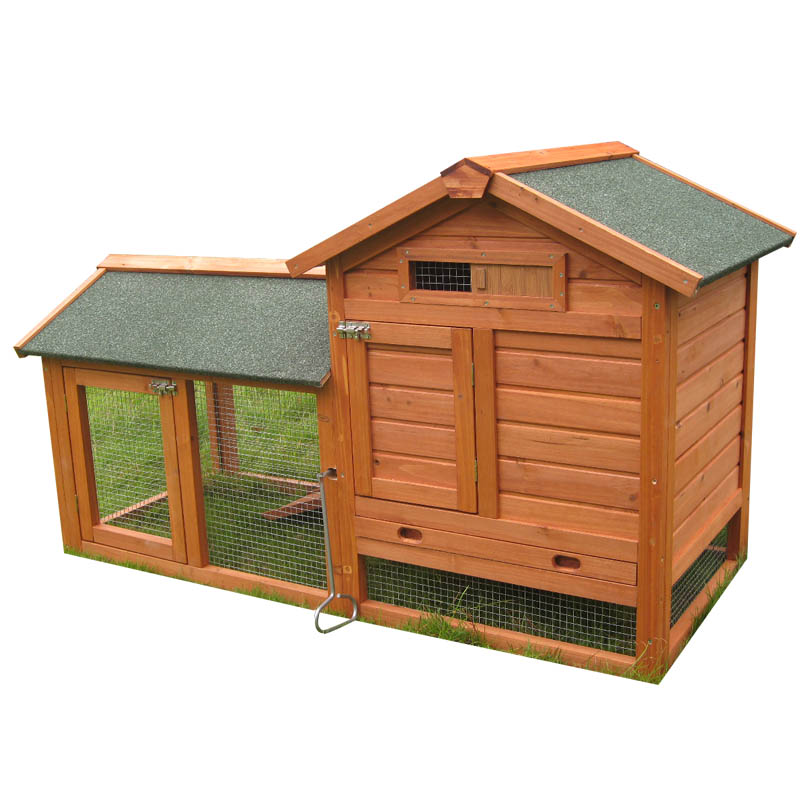
Quick Answer
To choose a wooden chicken coop manufacturer in China, verify its production capabilities, timber specifications, moisture protection, structural design, hardware quality, assembly consistency, inspection procedures, packaging performance, and export experience. Request a production-representative sample and a written specification before approving bulk production.
The best wooden chicken coop manufacturer China buyers select is the one that can demonstrate how it controls the product's critical components and repeat orders. A reliable supplier should answer technical questions clearly, disclose relevant subcontracting, and agree on measurable acceptance criteria before shipment.
Key Takeaways
- Evaluate timber, roof design, mesh, hardware, and joints as a complete system.
- Confirm the supplier's actual manufacturing role and how outsourced components are inspected.
- Test assembly, stability, door operation, cleaning access, and packaging before mass production.
- Compare landed cost and defect risk rather than selecting the lowest unit quotation.
- Put product specifications, packaging standards, inspection criteria, and defect remedies in writing.
12-Point Sourcing Checklist
1. Verify the Factory's Actual Manufacturing Capabilities
Begin by identifying which processes the supplier performs directly. These may include timber cutting, drilling, panel assembly, surface treatment, hardware installation, final inspection, and export packing. Some suppliers manufacture most components themselves; others coordinate subcontractors. Either arrangement can work if responsibility for quality is clearly defined.
Ask for a production workflow and confirm where the critical processes take place. If the supplier outsources roof panels, wire mesh, or metal fittings, establish who approves those components and who resolves defects. A supplier that cannot explain its production process may be difficult to hold accountable when specifications are missed.
2. Confirm the Timber Species and Material Specification
Wood type influences weight, machinability, appearance, durability, and cost. Pine and fir are used in many wooden outdoor structures, but the species name alone does not establish the quality of a finished coop. Grade, moisture content, knots, cracks, dimensions, and storage conditions also matter.
Request the declared timber species, component dimensions, moisture-control requirements, and acceptance criteria for visible defects. For outdoor products, ask how exposed timber is protected and whether the treatment or coating is suitable for the intended use. Avoid accepting vague descriptions such as “premium wood” without a written specification.
3. Examine Moisture Protection and Roof Construction
Rain exposure often reveals weaknesses that are not obvious in product photographs. Roof seams, exposed end grain, panel joints, and the interface between the roof and walls are common points to examine. Water that remains trapped around the base or joints can accelerate deterioration.
Ask about roof material, roof slope, overhang, drainage, coating, and the design of vulnerable joints. A water-resistant roof does not make every part of a coop waterproof. The intended installation location and local weather conditions should guide the specification.
4. Inspect Structural Strength and Joint Consistency
A coop must remain stable during handling, assembly, cleaning, and outdoor use. Check frame alignment, fastening points, panel thickness, and whether the structure twists when placed on a level surface. Loose joints may become more noticeable after repeated door operation or relocation.
Request assembly instructions and define acceptable gaps, alignment tolerances, and fastening requirements. Where relevant, ask the manufacturer to demonstrate stability using an agreed inspection procedure. Do not assume that a larger product is structurally stronger simply because it uses more timber.
5. Check Wire Mesh and Predator-Protection Details
Mesh performance depends on wire diameter, opening size, attachment method, and resistance to corrosion. A mesh panel can be strong while its staples or screws remain weak. Inspect the entire boundary, especially corners, door edges, and the connection between the run and the main housing.
Ask the supplier to specify mesh material, wire thickness, opening dimensions, coating, and fastening method. The appropriate design depends on the animals and local predators that the product must deter. Do not market a coop as predator-proof unless the claim is supported by the actual construction and intended installation conditions.
6. Review Hinges, Latches, Screws, and Other Hardware
Hardware failures can make an otherwise sound coop difficult to use. Doors should open smoothly, latches should engage securely, and removable trays should slide without catching on the frame. Corrosion resistance is particularly important when products are used outdoors in wet or coastal environments.
Confirm the material or finish of critical fittings and ask whether replacement hardware can be supplied. For bulk orders, agree on acceptable operation, fastening security, and visible corrosion or finish defects. If hardware is changed between production batches, require prior approval.
7. Assess Ventilation, Cleaning, and Everyday Usability
Retail customers judge a coop by more than its appearance. Access doors, removable trays, nesting boxes, ramps, and ventilation openings influence daily maintenance. Poorly positioned openings can make cleaning difficult or leave areas inaccessible for inspection.
Evaluate a physical sample using the tasks an end user will perform: opening the doors, removing the tray, reaching the nesting box, and checking the internal surfaces. Ensure that ventilation is suitable for the intended climate and that openings do not undermine security. Product dimensions should be matched to the intended flock size rather than selected from appearance alone.
8. Confirm Dimensional Accuracy and Component Completeness
For flat-pack products, a small dimensional error can prevent panels from aligning or screws from engaging correctly. Missing fasteners, mismatched parts, and unclear instructions can generate costly customer service cases even when the timber itself is acceptable.
Request a component list, dimensional drawings, hardware quantities, and an assembly manual. During inspection, verify that the carton contains every required component and that left- and right-side parts are correctly identified. Define the sampling method and tolerance limits before production starts.
9. Review Quality Control and Traceability
Ask the supplier how it inspects incoming timber, in-process assemblies, finished products, and packed cartons. A useful quality plan identifies the inspection stage, test method, acceptance criteria, and person responsible for release.
For example, appearance checks may cover cracks, splinters, coating defects, and panel alignment. Functional checks may cover latch operation, tray movement, and assembly fit. Record keeping should allow defects to be traced to a production batch and investigated systematically.
10. Test Packaging for International Shipping
Wooden coops are bulky, and flat-pack packaging can reduce shipping volume only if the product remains protected. Corners, roof panels, mesh, and projecting hardware may be damaged by compression, vibration, or rough handling. A damaged carton can also complicate warehouse receiving and inventory checks.
Ask for carton dimensions, gross weight, packing configuration, and protection for vulnerable components. Where practical, evaluate a packed sample through an appropriate distribution test based on the shipping route. Confirm whether the supplier provides assembly instructions, a parts list, and clear outer-carton identification.
11. Compare MOQ, Lead Time, and Total Landed Cost
The lowest factory price may not result in the lowest cost per sellable unit. Freight, carton size, import charges, inspection, damaged units, replacement parts, and assembly-related returns all affect the final economics.
| Cost factor | What to confirm | Why it matters |
|---|---|---|
| Unit price | Timber, hardware, roof, mesh, and standard accessories included | Prevents incomplete quotation comparisons |
| MOQ | Minimum per model, finish, and customized version | Affects inventory commitment |
| Packaging | Carton dimensions, gross weight, and protective materials | Influences freight and damage exposure |
| Lead time | Sample approval, production, inspection, and dispatch milestones | Supports realistic launch planning |
| After-sales risk | Replacement hardware, defective-unit handling, and response times | Helps control costs after delivery |
For reference, Shaw Ye's published wooden chicken coop category states that many models have MOQs of 50 or 100 units, while selected stocked models may be available in smaller quantities. Buyers should confirm the current MOQ for their chosen model, customization, and order terms.
12. Confirm Export Documentation and After-Sales Responsibility
Before placing an order, agree on the product specification, inspection procedure, delivery terms, payment milestones, and process for handling nonconforming products. Ask which export documents the supplier can provide and whether the destination market has additional requirements for wooden products, packaging materials, or timber imports.
Do not assume all wood products face the same import rules. Requirements can vary by destination, species, processing method, and whether wood is used in the product or in shipping packaging. Confirm the applicable requirements with the relevant authorities or your customs broker.
How to Score a Potential Supplier
A structured scorecard helps purchasing teams compare quotations objectively. The following weighting is a suggested internal framework, not an industry standard.
| Evaluation area | Suggested weight |
|---|---|
| Product construction and materials | 25% |
| Quality control and consistency | 20% |
| Packaging and shipping protection | 15% |
| Price and total landed cost | 15% |
| Production capacity and lead time | 15% |
| Communication and after-sales support | 10% |
Score each candidate against the same evidence requirements. A supplier with a lower price but weak packaging or inconsistent assembly may represent a greater commercial risk than a slightly more expensive supplier with stronger documented controls.
A Practical Sourcing Example
Imagine a garden-products distributor planning to import a wooden coop with an attached run. Two suppliers offer similar dimensions, but one uses a different mesh attachment method and provides no detailed assembly instructions.
The distributor can request samples from both suppliers, assemble them using the proposed instructions, inspect all joints and latches, and compare packed-carton dimensions. The buyer can then ask each factory to confirm its inspection process and quote the same order quantity with the same accessories and shipping terms.
This process exposes differences that photographs and headline prices cannot show. It also creates a clear reference standard for production inspection and future repeat orders.
Frequently Asked Questions
How do I choose a chicken coop supplier in China?
Compare manufacturing capabilities, material specifications, construction quality, sample performance, packaging, lead time, and total landed cost. Use a shared specification so every supplier quotes the same product.
What makes a reliable chicken coop manufacturer?
A reliable manufacturer can explain its production process, document critical specifications, inspect finished products consistently, communicate delivery risks early, and take responsibility for defects under agreed terms.
Should I request a sample before ordering in bulk?
Yes, especially for a new model or customized design. Use the sample to assess assembly, component fit, hardware operation, finish, and packaging requirements before approving mass production.
What is a typical MOQ for wooden chicken coops?
MOQ varies by model, stock availability, customization, and order conditions. Ask for the MOQ of the exact configuration rather than relying on a general company-wide figure.
How can I reduce shipping damage?
Review carton design, internal protection, component placement, carton strength, and shipping configuration. For large orders, consider a suitable distribution test and define responsibility for transport damage in the purchase agreement.
Choosing a wooden chicken coop manufacturer is ultimately a process of reducing uncertainty. Verify the factory, inspect the construction, test assembly, compare total costs, and document acceptance requirements before production. These steps help importers build a more predictable supply chain and protect their margins as order volumes grow.