Article Summary
This article answers a common question: does incense expire? We explain how long different types of incense last, what causes them to lose their scent, how to tell if your incense has gone bad, and the best ways to store it for long-lasting freshness. Whether you're a retailer managing inventory or a regular user, this guide helps you get the most out of your incense.
Introduction
You‘ve just bought a beautiful box of incense. You light one stick, the aroma fills the room, and you’re transported. But then life gets busy — and that box sits untouched for a year. Maybe two. Maybe longer.
When you finally open it again, you wonder: Is this still good? Has it expired?
The short answer: incense doesn‘t expire like food, but it can lose its scent and quality over time. Here’s everything you need to know about incense shelf life, storage, and how to tell if your incense is past its prime.
Does Incense Actually Expire?
Technically, no. Incense does not spoil, go rancid, or become unsafe to burn simply because it gets old. Unlike food or cosmetics, incense contains no perishable ingredients that “go bad” in a harmful way.
However, incense does have a shelf life. Over time, the aromatic oils that give incense its fragrance gradually evaporate. The scent becomes weaker, and the burning experience may not be as pleasant as when it was fresh.
So yes, incense “expires” in the sense that it loses its potency — but no, it doesn‘t become dangerous to burn.
How Long Does Incense Last?
The shelf life varies widely depending on the type and quality of the incense:
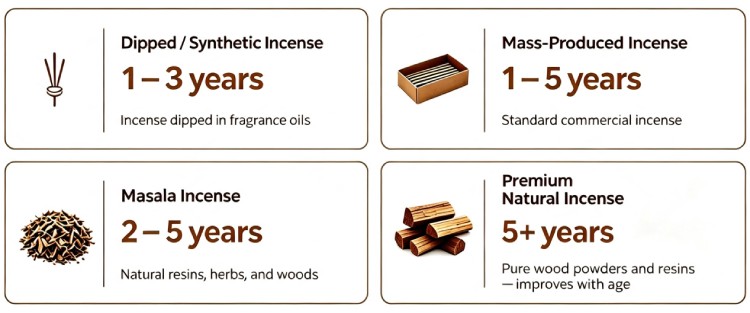
The key takeaway? Higher quality incense lasts longer — and in some cases, like premium agarwood or sandalwood, it can even deepen and mature over time.
What Causes Incense to Lose Its Scent Faster?
Several factors accelerate the decline of incense quality:
• Exposure to air — The fragrant oils evaporate faster when exposed to open air
• Light — UV rays break down essential oils
• Heat — High temperatures accelerate evaporation
• Humidity — Moisture can cause mold, flaking, and dull the scent
• Poor-quality ingredients — Lower-grade materials degrade faster
How to Tell If Your Incense Has Gone Bad
Here are the telltale signs that your incense is past its best:
1. Faint or no scent when unburned
A fresh stick of incense should have a noticeable, pleasant aroma even before it‘s lit. If you take a deep breath and smell almost nothing, the fragrance oils have likely evaporated.
2. Dry, cracked, or powdery texture
If the incense feels brittle, flaky, or falls apart easily, it has been exposed to too much air or heat.
3. Musty or moldy odor
If your incense smells damp, musty, or like mildew, it has absorbed too much moisture. Discard it immediately.
4. Visible mold or fungus
Any signs of mold, fungus, or discoloration mean the incense should be thrown away.
5. Difficulty staying lit
Old or moisture-damaged incense may struggle to burn consistently, repeatedly going out on its own.
6. Weaker burn time and scent duration
Older incense may burn faster or produce less fragrance than when it was fresh.
How to Store Incense Properly
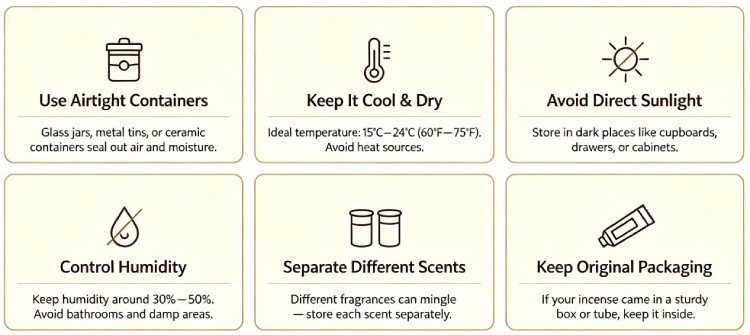
To keep your incense fresh and fragrant for as long as possible, follow these simple storage guidelines:
Natural vs. Synthetic: A Note on Quality
Here‘s an interesting paradox: higher-quality, all-natural incense often has a shorter shelf life than cheap synthetic incense.
Why? Because pure essential oils don‘t contain chemical stabilizers or fixatives. They evaporate naturally over time. Synthetic fragrances, on the other hand, are formulated with chemical perfumes that can linger for years.
But here’s the trade-off: natural incense offers a cleaner, purer, more authentic aroma — while synthetic incense, though longer-lasting on the shelf, often produces harsh smoke and artificial scents when burned.
A Note on Premium Incense: It Can Improve with Age
Not all incense fades. High-quality agarwood, sandalwood, and resin-based incense can actually deepen and improve with age.
Much like fine wine or aged whiskey, certain natural resins and woods develop more complex, rounded, and mellow fragrances over time. Some collectors intentionally age premium incense for years — even decades — to enjoy its matured aroma.
So if you have a box of premium agarwood or sandalwood incense tucked away, don’t rush to throw it out. It might just be getting better.
Quick Recap: Incense Storage Cheat Sheet
| Do ✅ | Don't ❌ |
| Store in airtight glass or metal containers | Store in plastic bags or cardboard boxes |
| Keep in cool, dark places (15°C–24°C) | Expose to direct sunlight or heat |
| Keep humidity at 30%–50% | Store in bathrooms or damp areas |
| Separate different scents | Mix different fragrances together |
| Check periodically for signs of deterioration | Ignore musty smells or visible mold |
| Use high-quality natural incense for longer enjoyment | Assume all incense lasts forever |
Conclusion
Does incense expire? Not in the way food does — but it does lose its vibrancy over time.
The good news is that with proper storage — airtight containers, cool and dark places, and protection from moisture — most incense can last for years. And if you're investing in premium natural incense, you might even find that time makes it better.
So take care of your incense. Store it well. And when you finally light that stick you've been saving — you'll be rewarded with a fragrance that's as beautiful as the day you bought it.
FAQ
Q1: Does incense expire?
Incense doesn't spoil like food, but its fragrance can weaken over time. Natural incense typically lasts 2–5 years, while premium agarwood or sandalwood can improve with age.
Q2: How should I store incense?
Store in an airtight container in a cool, dry, dark place. Keep it away from heat, sunlight, and humidity.
Q3: Can I still burn old incense?
Yes — as long as there's no mold or musty smell. The scent may be weaker, but it's still safe to burn.
Q4: Can incense go bad?
Incense can degrade in quality but won't become unsafe. Discard it if you see mold, smell mustiness, or notice significant color changes.
Related Products
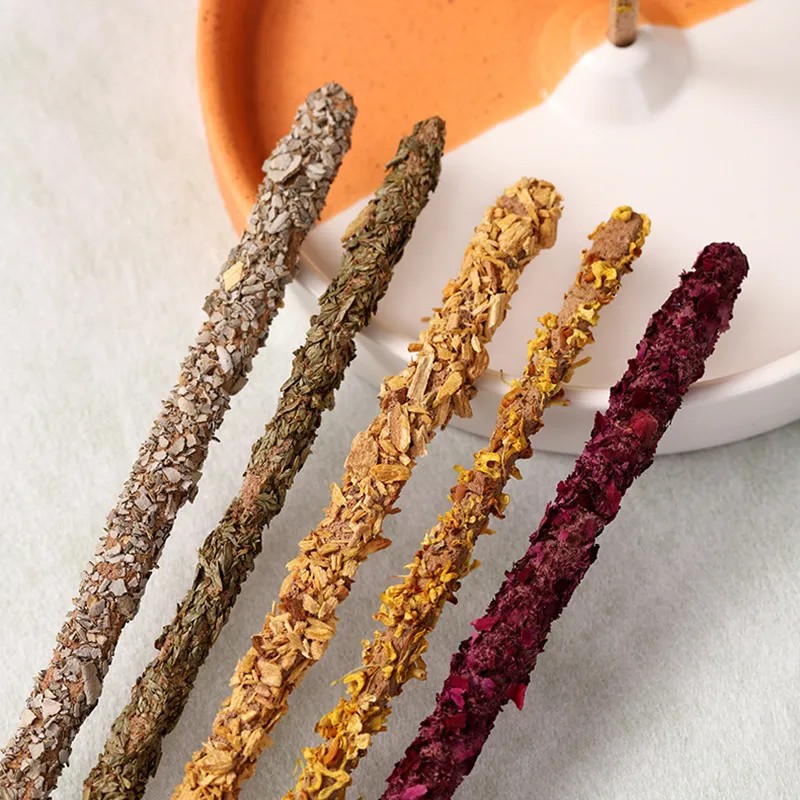
Premium Hand-Rolled Smudge Sticks – 100% natural, Long-lasting and properly cured for optimal fragrance.
About Kuanggu Incense
Kuanggu Incense was founded in 2021 in Quanzhou, Fujian — the starting point of the Maritime Silk Road. We are rooted in China's Incense Capital, where over 1,000 years of incense-making heritage, 300+ enterprises, and US$2.1 billion in annual output value make us a trusted source for premium natural incense.
We offer incense sticks, cones, coils, innovative incense products , and other accessories — fully customizable — with private label, OEM, ODM and flexible MOQ for brands worldwide.
More than a supplier, we are inheritors of Chinese incense culture, blending ancient wisdom with modern quality to bring Eastern fragrance to the global market.
Ready to bring quality incense to your product line? [Contact us ]
Kuanggu Incense — Rooted in China‘s Incense Capital, sharing the fragrance of the East with the world.